 North Coast Development Corporation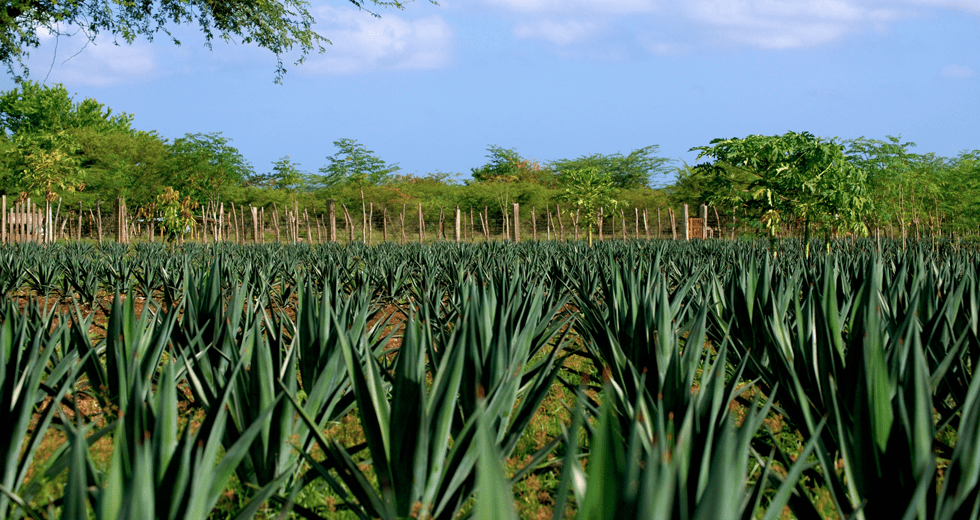
Sisal production is a major part of our agricultural emphasis for the north coast region of Haiti. Sisal is a plant that tolerates heat and drought well. Its leaves produce a strong natural fiber for rope, rugs, wall paper and many other useful items. Sisal plants live and produce leaves for about 10 years. All during the plants life it shoots out infants from its roots. At the end of the plants life, it produces a stalk about 15 feet tall with flowers and hundreds of infant plants, making it an extremely reproducible and abundant resource of fiber. The waste that is produced from the decortication process is excellent animal feed or fertilizer. We are using the waste produced today to feed our goats in the current drought being experienced in the northern region. What a blessing this plant is to animals and humans alike.
We are in partnership with our Haitian friends at Sisalco to eventually grow and decorticate over 3000 hectares of sisal fiber. This is a very ambitious but possible goal with help from the Clinton Foundation and the Haitian government, and co-operation with the small farmers association. Our process is to grow infant plants on North Coast Farm to give to small farmers across the region. After maturity in 2 to 3 years, we will buy back leaves from the plants, decorticate the fiber and then resell to Sisalco who produces the sisal products, and who has an ongoing and growing market for these products. We will work with the farmers to plant intercrops such as beans, peanuts, sorghum, and other market crops so they can begin to earn money before, during and after the sisal plants maturity. To assist the small farmers and land holders prepare their land, we received the generous gift of a tractor by the Clinton Foundation. To till the land owned by the Haitian government, we hope to have the use of heavy equipment available in Haiti.
Our sisal project is moving forward one small farm at a time. As neighbors and officials begin to see our progress, more excitement and interest is developing. We have high hopes for sisal and the Northern Region.
 North Coast Development Corporation